



In the wave of the global economy, air freight has become a critical link connecting world markets. Analysis shows that while air freight accounts for only about 1% of global trade volume, it carries over 35% of high-value goods. The explosive growth of cross-border e-commerce, in particular, has upgraded air freight from a traditional industrial supply chain component to the core support of digital trade. Its speed advantage is reshaping the global logistics landscape.
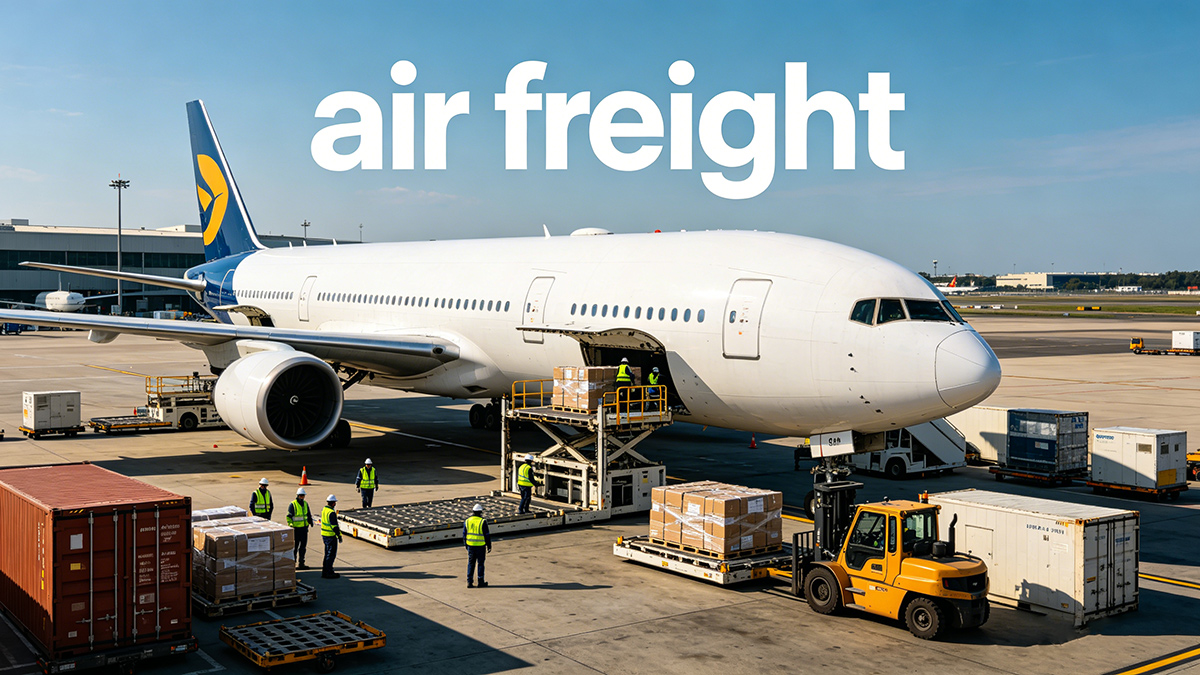
1. Definition and Current Development of Air Freight
Air freight refers to a logistics method of transporting goods via aircraft. Distinguished from sea and land transport, its key characteristics are strong timeliness, high safety, and wide coverage.
Review in 2025: Global freight demand (CTK) increased by 3.4% year-on-year, capacity increased by 3.7%, and exceeded 70 million tons for the first time; Asia Pacific+8.4% (strongest), North America -1.3% (only negative growth), and Europe remained stable.
A prominent case is post-pandemic supply chain restructuring: Chinese cross-border e-commerce platforms like Shein and Temu have compressed the cycle from design to European consumers' hands to 5-7 days by optimizing their trunk air freight networks, far surpassing the 30-45 days of traditional sea freight. This proves that for companies pursuing rapid Time-to-Market, air freight is not just a transportation tool but a core element of competitive strategy.
2. Core Advantages of Air Freight in E-commerce
2.1 Timeliness and Market Response Speed
Facing fluctuations in consumer purchasing power, utilizing air freight enables "weekly replenishment" or even "daily replenishment" models. For example, in the consumer electronics sector, Apple often uses its dedicated air network to launch new products simultaneously worldwide, quickly meeting peak demand. This strategy turns logistics into a marketing accelerator.
2.2 Safety and Protection for Precision Goods
For high-value cargo such as pharmaceutical cold chains, precision instruments, and luxury goods, air freight provides more stable temperature control and security services. Over 80% of global cold-chain pharmaceutical logistics is completed via air transport because air waybills are equipped with real-time monitoring systems, ensuring precise delivery within the time window.
2.3 Flexibility in Responding to Sudden Demand
Seasonal or promotional events (like "Black Friday," Singles' Day) pose challenges to merchants' inventory turnover. Using air freight as an "emergency channel," e-commerce sellers can quickly replenish best-selling stock, reducing sales losses due to stockouts. Data shows that merchants utilizing air freight for replenishment see an average sales increase of 20%-35% during promotional seasons.
3. Low-Cost Solutions and Innovative Models
Addressing pain points for SMEs, modern air freight services have developed cost-reducing options like "consolidation" and "economy class." For example:
-
Consolidation Air Freight: Integrating multiple small-batch orders into full-container slots reduces freight costs by 30%-50% directly while maintaining faster delivery times.
-
Sea-Air Mixed Mode: Goods first travel by sea to transit hubs like Dubai, UAE, then switch to air freight. This "air freight springboard" solution saves about 40% compared to all-air transport, with only 2-3 extra days in transit time, making it ideal for non-urgent goods like home furnishings and daily necessities.
Industry reports indicate that e-commerce businesses adopting this hybrid model can effectively balance cost and efficiency, with average logistics costs accounting for 8%-12% of total order value, 3-5 percentage points lower than traditional pure air freight.
4. Technology-Driven Future Trends
Looking ahead to 2026 and beyond, the transformation of air freight will revolve around three areas:
-
Digital Freight Platformization: Platforms like Freightos and Flexport enable real-time price comparison, intelligent booking, and end-to-end visibility. Corporate satisfaction with logistics tracking has risen from 55% to 82% (IATA data).
-
Green and Low-Carbon Transition: The use of Sustainable Aviation Fuel (SAF) is growing by over 30% annually, reducing the carbon footprint of air freight by around 20%, aiding corporate ESG goals.
-
"Last-Mile" Upgrade: Combined with drones and automated sorting stations, air freight is expanding from airport-to-factory to ultra-fast doorstep delivery for consumers (e.g., FDA-approved pilot projects for medicine airdrops).
Conclusion: Air Freight – The "Hardcore Engine" of Global Trade
Undeniably, air freight has become an indispensable "lifeline" in the cross-border trade ecosystem. It represents not just a physical mode of transport but also competitiveness in speed, trust, and agility. Whether for small sellers or large multinational corporations, incorporating it into supply chain strategy is like installing a turbocharger in the fast lane of modern commerce. According to McKinsey predictions, within the next three years, companies deeply integrating air freight will gain 15%-20% more market share than the industry average (companies relying primarily on land or sea transport).
Seizing the opportunity of air freight is equivalent to holding the key to breaking through in globalization. Now is the time to truly make our supply chains "take flight."